Affected Places - 8882025
Photos, Photocollage, Object
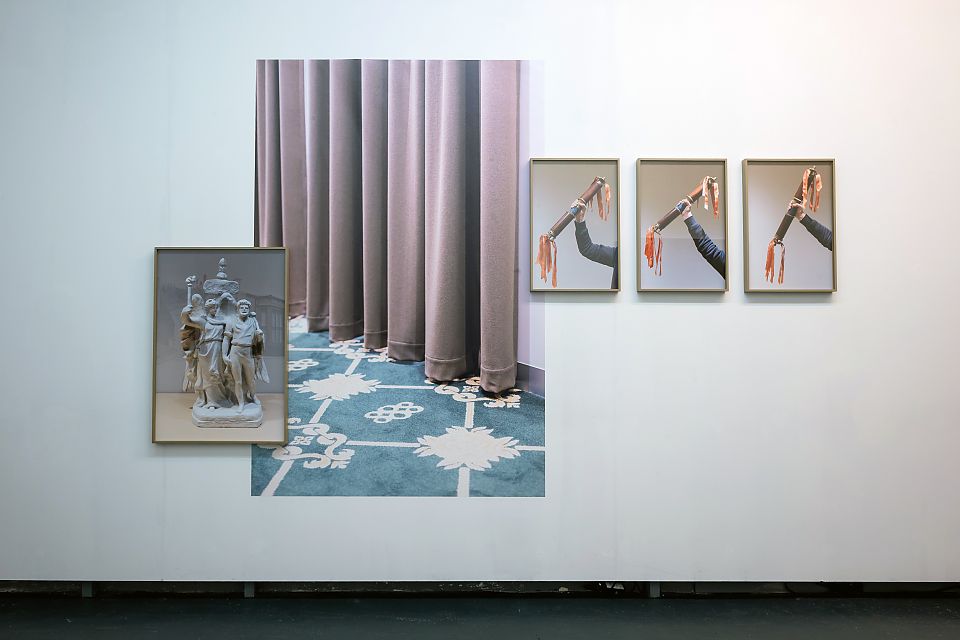
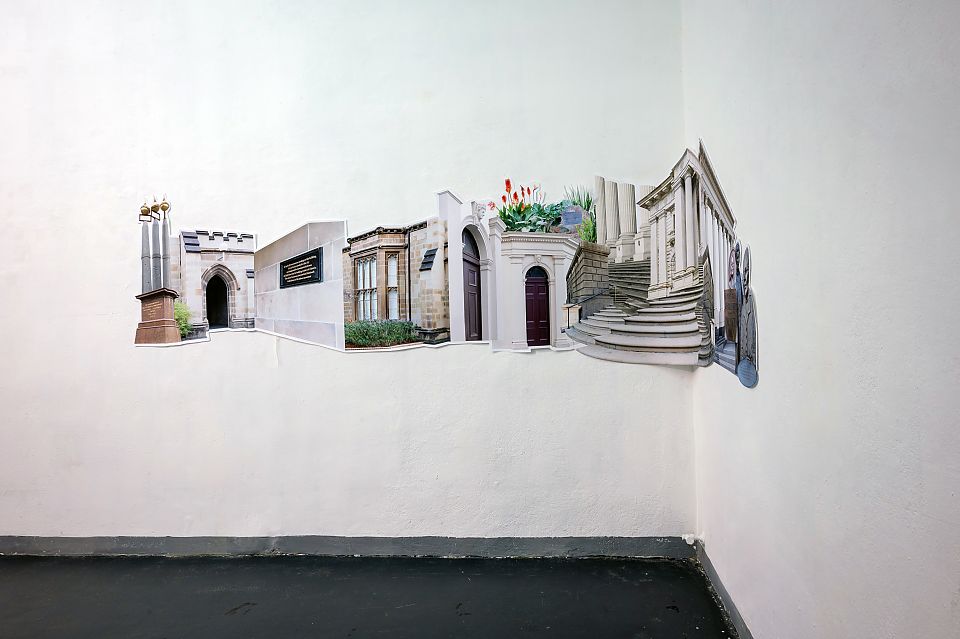
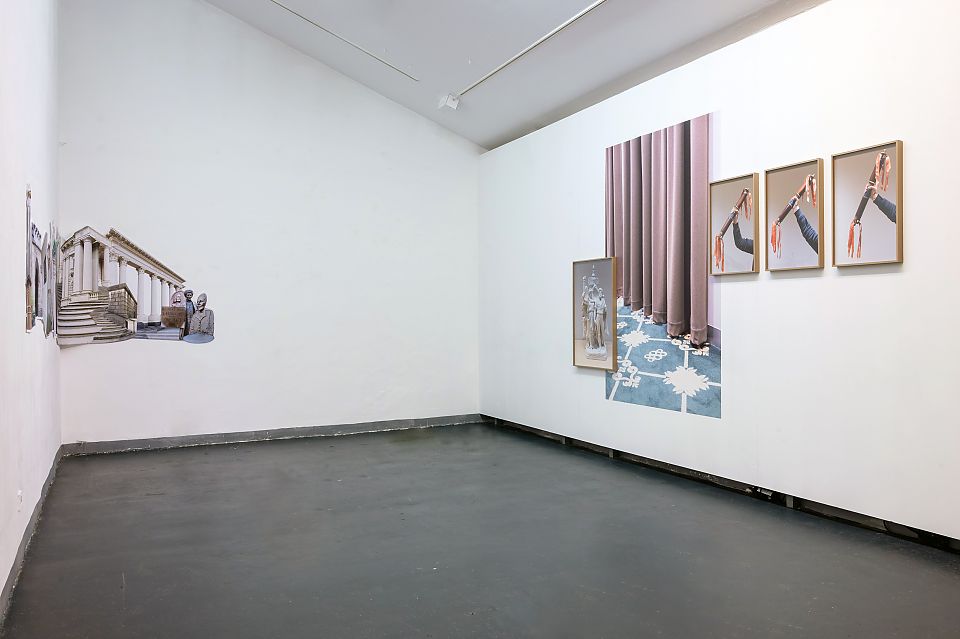
Installationsansichten: "Blick ins Archiv", Gruppenausstellung, kuratiert von Juliana Furthner & Pia Wamsler, Kunstverein Baden (A), 2025; Fotos: Michael Kofler

Installation views: Artist in Residency Lower Austria, Open Studio Day, Melbourne, 2025


"Ceremonial baton", 40 x 60 cm, 2025


Bild links: "8 Hour Monument maquette", 60 x 88 cm, 2025
Bild rechts: "Solidarity Hall", 100 x 150 cm, 2025

The work refers to the “8 Hour Monument” in Melbourne, whose three numbers 888 stand for the demands of the labor movement: Eight hours of work, eight hours of sleep, eight hours of leisure.
In 1856, Melbourne's stonemasons and construction workers were the first in the world to fight for the eight-hour day with full pay - a success that still shapes the world of employment today.
The work follows the protest march of these workers from Melbourne University to Parliament. The photo collage shows places along this route and refers to its historical and contemporary relevance.
Photographs from the Workers Museum in the Trades Hall Melbourne document objects that are reminiscent of this movement. The museum functions as an archive; the photographic staging symbolically “externalizes” its objects - a performative reminder of solidarity and resistance.
Three photographs show the “Ceremonial Baton” from 1888, which was later used in processions to commemorate 1856. Another photograph shows the carpet in the Solidarity Hall, whose design with carnations and the number 8 refers to the symbols and aesthetics of the workers' movement.
______________________
Die Arbeit bezieht sich auf das „8 Hour Monument“ in Melbourne, dessen drei Ziffern 888 für die Forderung der Arbeiter:innenbewegung stehen: Acht Stunden Arbeit, acht Stunden Schlaf, acht Stunden Freizeit.
1856 erkämpften die Steinmetze und Bauarbeiter Melbournes als Erste weltweit den Achtstundentag bei vollem Lohnausgleich – ein Erfolg, der bis heute Arbeitskämpfe prägt.
Die Arbeit folgt dem Protestmarsch dieser Arbeiter:innen von der Universität Melbourne zum Parlament. Die Fotocollage zeigt Orte dieser Route und verweist auf ihren historischen wie aktuellen Gehalt.
Fotografien aus dem Workers Museum in der Trades Hall Melbourne dokumentieren Objekte, die an diese Bewegung erinnern. Das Museum fungiert als Archiv; die fotografische Inszenierung bringt seine Objekte symbolisch „nach außen“ – ein performatives Erinnern an Solidarität und Widerstand.
Drei Fotografien zeigen das „Ceremonial Baton“ von 1888, das später bei Prozessionen zur Erinnerung an 1856 verwendet wurde. Eine weitere Aufnahme zeigt den Teppich in der Solidarity Hall, dessen Gestaltung mit Nelken und der Zahl 8 auf die Symbole und Ästhetik der Arbeiter:innenbewegung verweist.
______________________
Die Arbeit wurde im Rahmen des Artist in Residency Programmes des Landes Niederösterreich in Kooperation mit dem RMIT Melbourne entwickelt, realisiert und finanziert. 2026 wurde die Arbeit von der Sammlung Land Niederösterreich angekauft.